Water around a water heater: what to photograph before service
Water near a heater does not by itself prove the tank failed. Photograph where it first appears from a safe distance. Keep clear of wet electrical equipment and never cap a relief discharge.
Record the first wet area
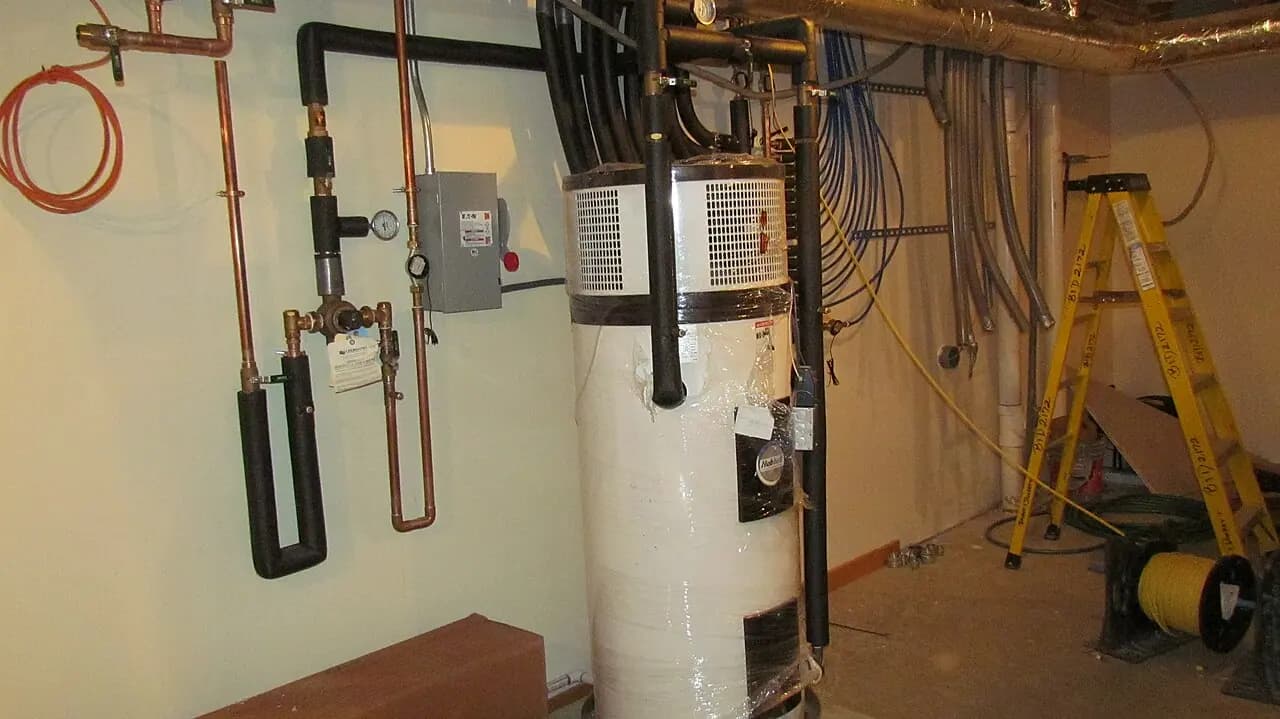
Take a wide photo showing the heater, floor, nearby appliances and drain pan. Then document the apparent first wet point without touching hot equipment. Does water appear continuously, after heating or after another fixture is used? A pan or floor drain can move water away from its origin. Distinguish where you first saw it from where you think it began.
Keep safety devices intact
Do not plug or obstruct a temperature-and-pressure relief discharge. Do not open electrical covers or adjust gas equipment. If water approaches wiring or a powered appliance, keep away and seek safety advice. Use only a familiar, safely accessible shutoff if you know its function. For a gas smell or immediate danger, follow the responsible utility’s or emergency service’s instructions rather than troubleshooting the appliance.
Supporting sources: A. O. Smith — residential electric heater safety and troubleshooting
Ask for evidence before replacement
A service visit should identify both the source and the condition causing water. Connections, components, condensate and tank defects can require different scopes.
| What you notice | What to record | Useful next step |
|---|---|---|
| Water at a connection | Photo, timing and active dripping | Which joint or component was tested? |
| Flow from a discharge pipe | Termination location and timing | Why is the safety device discharging? |
| Water in a drain pan | Other visible wet points | Has tank failure been established? |
Include damage control
Drying and damaged finishes may need work beyond the heater repair. EPA emphasizes fixing the water source as well as addressing wet materials. Ask what protection is appropriate and what the plumbing quote excludes. If replacement is needed, confirm disposal, permits, reconnection changes and an operating demonstration. Retain the diagnosis and photos for maintenance or insurance discussions.
Supporting sources: EPA — moisture control and water damage
Questions homeowners ask
Can I use the heater while waiting?
That depends on the source and safety conditions. Describe the active leakage and nearby equipment when calling. Follow model-specific and qualified safety guidance; a small puddle is not a safety clearance.
Is a wet pan proof of a leaking tank?
No. Water can arrive from several nearby sources or components. Ask how the actual origin was identified and what observation supports the proposed repair.
Can I stop a drip by capping its discharge pipe?
No. A relief discharge is part of a safety system and must remain unobstructed. Arrange qualified assessment of the cause rather than disabling protection.
Sources & verification
LocalFoundry checked these primary resources to support the statements cited above. Selection of a source does not imply its endorsement of LocalFoundry or a service provider.
- A. O. Smith — residential electric heater safety and troubleshooting · Source checked October 26, 2026
- EPA — moisture control and water damage · Source checked October 26, 2026
Confirm current requirements with the authority or equipment manufacturer for your property. This is general homeowner guidance, not a diagnosis, engineering design or promise of service.